If a big rig or delivery truck has slammed into your vehicle, you’re likely already getting the sense that commercial vehicle accidents create problems far more serious than your typical two-car collision. A car accident lawyer can help you sort out the layers and get the help and compensation you’re entitled to.
How Commercial Vehicle Accidents Are Different
Size & Stopping Room
A fully loaded tractor-trailer can tip the scales at 80,000 pounds, and most passenger cars are around 4,000 pounds. That twenty-to-one weight gap means the force that’s transferred in a crash is enormous. The smaller vehicle absorbs the bulk of the energy, which is why injuries in these collisions often involve broken bones, spinal damage, or worse. Regular car-on-car wrecks simply do not generate the same level of kinetic energy.
At 65 miles per hour under ideal dry conditions, a passenger car needs roughly 316 feet to come to a halt. A loaded semi, in contrast, needs nearly the length of two football fields. Simply put, the physics leave less room for error.
Rules & Regulations
Commercial operators must follow hours-of-service limits set by the Federal Motor Carrier Safety Administration and log every mile with electronic devices that record their speed, braking, and rest periods. When those logs show a driver pushed past the limit, the violation becomes powerful evidence against the driver. Violations of the rules can make a trucker partially liable even if they didn’t actually cause an accident, under the right circumstances.
Liability & Insurance
In a regular crash you usually just deal with one other driver and that driver’s insurance company. A commercial crash can pull in the driver, the trucking company, the maintenance shop that last serviced the brakes, the shipper who loaded the cargo, and sometimes even the manufacturer of a defective part. Each of those parties will have their own insurance and their own set of records. Tracking them all down takes time and specialized knowledge.
In addition, commercial carrier insurance policies often have higher limits because the potential for damage is so much greater, yet the carriers also fight harder and move slower precisely because there’s so much of their money at risk.
Injuries & Evidence
In fatal large-truck crashes, roughly 82% of the people killed are not truck occupants. Passenger-vehicle drivers and their passengers absorb the worst of the impact, and thus catastrophic injuries like traumatic brain injury, spinal-cord damage, and amputations occur at higher rates in these accidents than in collisions between similar-sized cars. This means much larger medical bills and much longer recovery.
And, unlike with a passenger car, you need some critical black-box data from the truck’s engine control module and the electronic logging devices. Companies must also keep maintenance records for the vehicle, driver drug test results, and hours-of-service logs. In a regular car crash you might rely primarily on police photos and witness statements; here, the paper and digital trail runs much deeper, and you are likely to need legal help to dig it all out.
Talk to a Car Accident Lawyer Soon
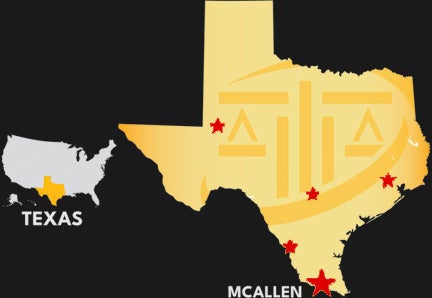
Commercial accidents can be devastating, but we have experience in these types of cases. Visit the Almarez Law Firm now in McAllen, San Antonio, or Midland, TX today to start your free consultation.
Connect with us


- July 2026
- June 2026
- May 2026
- April 2026
- March 2026
- February 2026
- January 2026
- December 2025
- November 2025
- October 2025
- September 2025
- July 2025
- June 2025
- April 2025
- March 2025
- February 2025
- January 2025
- December 2024
- November 2024
- October 2024
- September 2024
- August 2024
- July 2024
- June 2024
- May 2024
- April 2024
- March 2024
- February 2024
- January 2024
Archives

Almaraz Law Firm
212 W. Nolana Ave. McAllen, TX 78504,
8422 Fountain Circle, San Antonio, TX 78229
701B W. Indiana Ste. 20, Midland, Texas 79701
Hours: Monday-Friday 9:00am - 4:30pm
*Midland, Texas available by appt only*