
Blog

What If the Other Driver Doesn’t Have Insurance in Texas?

Here in Texas, we have a fault system for auto accidents. That means if someone's negligence caused the accident, they are then responsible to pay the losses and damages of everyone else. In reality, it's not the individual who pays but their insurance company, and that means things get tricky if the responsible party doesn't have insurance. Talk to a McAllen, TX auto accident lawyer as soon as possible after a wreck to protect yourself and find out what all your options are.

What If the Other Driver Doesn't Have Insurance in McAllen, TX?

Turning to Your Insurance

The first thing you should do is check whether you have Personal Injury Protection (PIP) coverage. This doesn't cover all your losses and damages, but it will cover your medical bills and lost wages. You might not have PIP coverage, but you should know if you don't because you will have had to decline it in writing.

Texas requires insurance companies to offer this coverage no matter what and requires them to get your written refusal if you don't want it. If your insurance company did not do this, then they become responsible to provide PIP protection as if you were paying for it. If you don't have PIP, or if it's not enough, you may also have Uninsured Motorist (UM) coverage. This applies whenever you are in an accident caused by another person who has no insurance or if you are the victim of a hit-and-run.

Investigating Third-Party Options

Even if the person primarily responsible for the accident doesn't have insurance, there may be a third party you can turn to. There might have been another driver involved, for example, who may not be primarily at fault but still may hold some fault. You may be able to make a claim with their insurance company. If there's any chance that a car manufacturer was negligent in any way, or if the city could be responsible because of negligence in caring for roads or something similar, your lawyer will help you investigate all these options.

Proving Fault

Fault is always important in a car accident, and especially if someone doesn't have insurance. Even if you're filing a claim with your own insurance company, you will have to prove that the other driver's actions are responsible if you want to claim UM coverage, for instance. Always call 911 and get the police on the scene, and gather whatever evidence you can to show what happened.

Texas law allows you to make a claim so long as you are not more than 50% responsible for the accident. If you're 51% or more responsible, then you can claim nothing, even if someone else bears a lot of responsibility. If you are less than less than 51% responsible, your compensation will still be reduced by the same percentage as your fault. Your lawyer's job, among other things, is to protect you for any unfair blame that would reduce your compensation inappropriately.

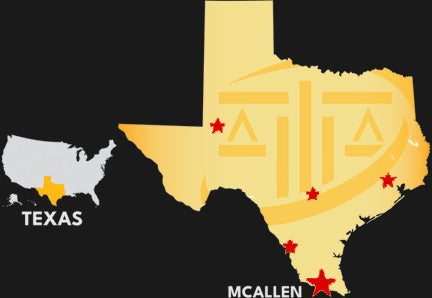
To get the help and protection you need after an accident, contact the Almaraz Law Firm in McAllen, TX. We also serve clients in San Antonio and Midland.
Recommended Posts

What Evidence Is Most Important in Building a Strong Injury Case?

If you've been injured by someone else here in McAllen, TX, it's a smart first move to look for a "personal injury lawyer near me" and talk about your case. An attorney with experience in these cases can review your evidence, tell you where your case really stands, and help you bring a strong claim. What Evidence Is Most Important in Building a Strong Injury Case? A personal injury action can only succeed when the plaintiff proves every element of the underlying claim. There are four elements you'll need to prove, which are: A legal duty was owed to you by the defendant There was a breach of that duty That breach was the actual and proximate cause of the harm you've suffered You have compensable damages You might be familiar with the concept of "beyond a reasonable doubt" for proving things in court. That only applies in criminal law. For civil law, such as a personal injury claim, the standard is "a preponderance of the evidence." That means you'll just need to show that each element is more likely true than not. Medical Records Medical proof is usually the center of these cases, as it supplies the only reliable account of the injury itself, its cause, its duration, and the losses that followed from it. You'll typically need to produce a written report from the attending physician who treated you, stating the nature and extent of your injury, the treatment you've been given, any temporary or permanent disability you're suffering from these injuries, the prognosis for your recovery, and anything else your lawyer may advice you to include. Then you'll also need itemized medical, dental, and hospital bills or receipts to go along with the report and prove what you spent (or are being billed) for treatment. Lost Wages and Salary The best way to prove what you've lost here is with a written statement from your employer that records the hours or days you've actually missed, whether you worked full- or part-time, and the wages or salary that you've lost. If you're self-employed, you'll need documentary evidence of the exact income that was lost. If you've missed out on a bonus that you would have otherwise been eligible for, lost paid time off or vacation days, or weren't able to take overtime that you normally would have (and that overtime was available had you been able to take it), you'll be able to collect for all this, as well, with the right documentation. Records of the Accident Itself You'll also need an official accident or police report prepared by investigating officers. Photographs and video of the scene, of visible injuries, and of damaged property, once you get them authenticated, are very important for the insurance fact-finder to see things that testimony alone cannot convey. Witness Reports Statements by you as the injured person and from independent witnesses who observed the event or have seen the effect of your injuries on your life will be very important to proving a connected narrative about what happened. Your own testimony is important, but the more you have of third-party, independent witness testimony, the better. Find a "Personal Injury Lawyer Near Me" in McAllen, TX If you've been injured, contact the Almaraz Law Firm in McAllen, San Antonio, or Midland, TX today for help in presenting your evidence to make a strong claim for the damages you're owed.

How Do Defective Products Lead to Serious Harm and Claims?

Defective products can cause a victim severe injuries, and these product liability accidents can result in large personal injury claims. If you've been harmed by a product, talk to an accident lawyer in McAllen, TX to find out all your options for holding those responsible accountable. What Counts as a Defective Product? Everyday items fail to work properly all the time. A car part fails, or a household tool breaks, or a medical device does not perform. These failures can cause broken bones, burns, internal injuries, or worse, and the question is how to know when these harms are true accidents or the fault of the user and when they signal a problem with the product itself. The law recognizes three main ways that a product can be considered defective: Design defect Manufacturing defect Marketing defect Design Defect A design defect exists when the product is unsafe even though it was made exactly as planned. The entire product line shares the same problem, in other words. For example, if an entire line of baby bath seats has a tendency to flip over when water levels rise to a certain level, this is a design defect. Manufacturing Defect A manufacturing defect occurs when the design is fine, but something goes wrong during production. In these cases, usually only certain units contain the flaw. If 20,000 cars are made on an assembly line to the same specification, but 5,000 of them got airbags from a run of airbags containing a fault, only those 5,000 vehicles are a problem. This is a manufacturing defect. Marketing Defect A marketing defect is also sometimes called "failure to warn," and it happens when the product either doesn't have clear instructions or lacks a warning about risks that wouldn't be obvious to the user. How Defective Products Cause Product Liability Accidents Physical Mechanisms Mechanical failure is a common cause of harm and often happens when a structural member breaks. The sudden release of stored force can accelerate a broken part and essentially turn it into a missile. In other cases, the structural failure causes an item to collapse, and someone leaning or standing on it in that moment falls. Torn ligaments, fractures and breaks, dislocations, and internal hemorrhages are often the result. Thermal Burns Overheating components or exposed heating elements that should be protected are another common cause of harm and product liability claims. The overheating itself can cause harm or flammable materials can be ignited. Chemical and Electrical Burns Sometimes burns are from chemicals. These can be contaminants that shouldn't be there at all, or they can be leaks of known chemicals that were improperly sealed. Electrical currents can also cause serious injuries when a short or other issues ccauseelectricity to pass through a person. Talk to an Accident Lawyer in McAllen, TX If you've been injured by a defective product and want to discover if you have a claim, reach out to the Almaraz Law Firm in McAllen, Midland, or San Antonio, TX today to start your free consultation.

What Makes Commercial Vehicle Crashes Different from Regular Ones?

If a big rig or delivery truck has slammed into your vehicle, you're likely already getting the sense that commercial vehicle accidents create problems far more serious than your typical two-car collision. A car accident lawyer can help you sort out the layers and get the help and compensation you're entitled to. How Commercial Vehicle Accidents Are Different Size & Stopping Room A fully loaded tractor-trailer can tip the scales at 80,000 pounds, and most passenger cars are around 4,000 pounds. That twenty-to-one weight gap means the force that's transferred in a crash is enormous. The smaller vehicle absorbs the bulk of the energy, which is why injuries in these collisions often involve broken bones, spinal damage, or worse. Regular car-on-car wrecks simply do not generate the same level of kinetic energy. At 65 miles per hour under ideal dry conditions, a passenger car needs roughly 316 feet to come to a halt. A loaded semi, in contrast, needs nearly the length of two football fields. Simply put, the physics leave less room for error. Rules & Regulations Commercial operators must follow hours-of-service limits set by the Federal Motor Carrier Safety Administration and log every mile with electronic devices that record their speed, braking, and rest periods. When those logs show a driver pushed past the limit, the violation becomes powerful evidence against the driver. Violations of the rules can make a trucker partially liable even if they didn't actually cause an accident, under the right circumstances. Liability & Insurance In a regular crash you usually just deal with one other driver and that driver's insurance company. A commercial crash can pull in the driver, the trucking company, the maintenance shop that last serviced the brakes, the shipper who loaded the cargo, and sometimes even the manufacturer of a defective part. Each of those parties will have their own insurance and their own set of records. Tracking them all down takes time and specialized knowledge. In addition, commercial carrier insurance policies often have higher limits because the potential for damage is so much greater, yet the carriers also fight harder and move slower precisely because there's so much of their money at risk. Injuries & Evidence In fatal large-truck crashes, roughly 82% of the people killed are not truck occupants. Passenger-vehicle drivers and their passengers absorb the worst of the impact, and thus catastrophic injuries like traumatic brain injury, spinal-cord damage, and amputations occur at higher rates in these accidents than in collisions between similar-sized cars. This means much larger medical bills and much longer recovery. And, unlike with a passenger car, you need some critical black-box data from the truck's engine control module and the electronic logging devices. Companies must also keep maintenance records for the vehicle, driver drug test results, and hours-of-service logs. In a regular car crash you might rely primarily on police photos and witness statements; here, the paper and digital trail runs much deeper, and you are likely to need legal help to dig it all out. Talk to a Car Accident Lawyer Soon Commercial accidents can be devastating, but we have experience in these types of cases. Visit the Almarez Law Firm now in McAllen, San Antonio, or Midland, TX today to start your free consultation.